
Bank reconciliation is slow, error-prone, and intimidating for non-accountants
For many small businesses, reconciling accounts means manually reviewing every bank transaction and ensuring it is allocated correctly. The process is time-consuming and often technically confusing.
As a result, owners either outsource it, rush it and risked errors, or avoid it altogether, risking inaccuracies and adding stress to tax.
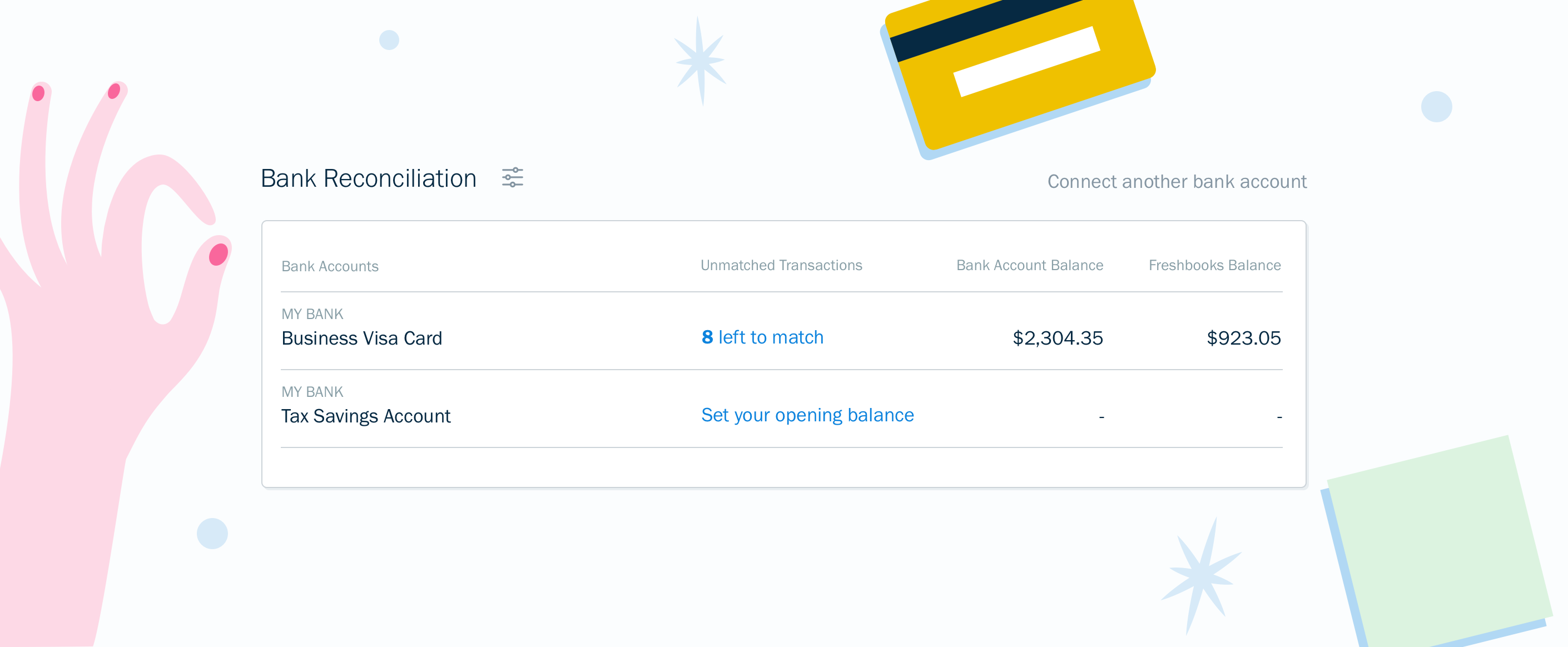
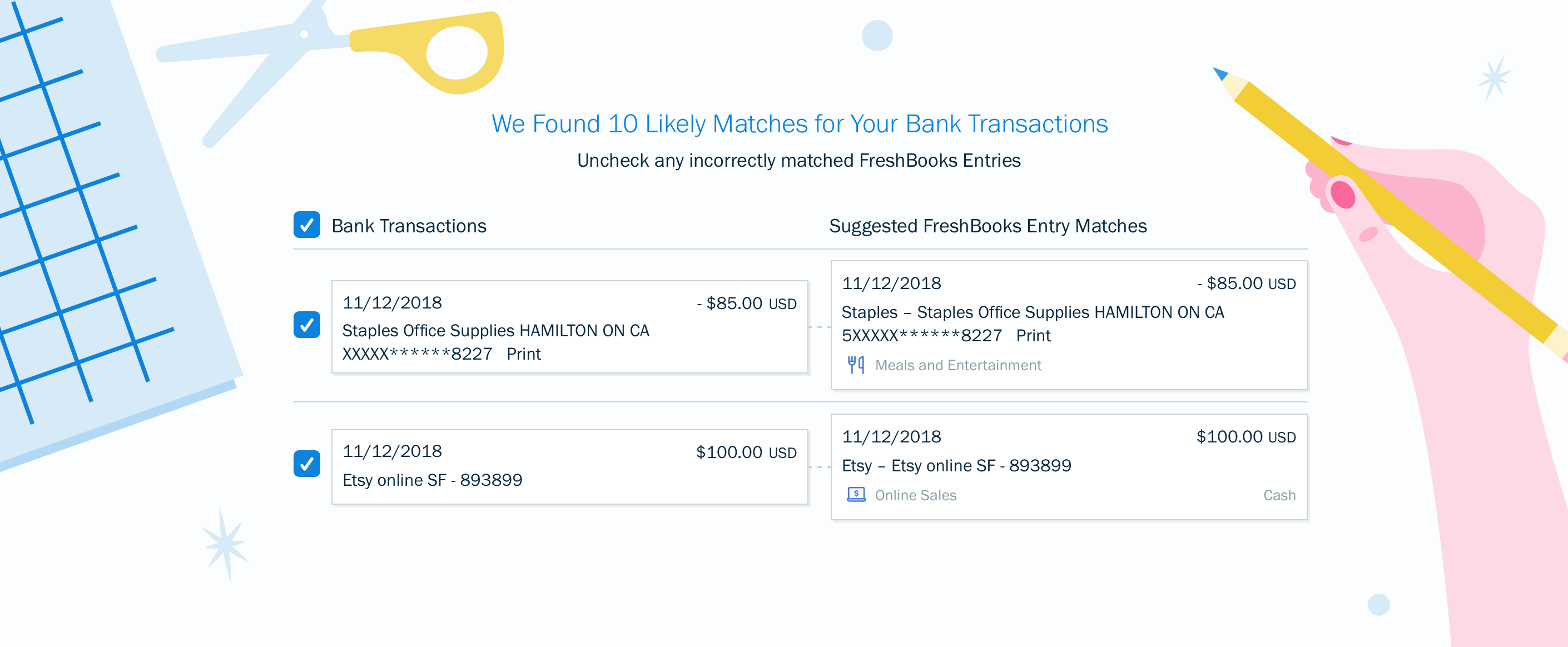
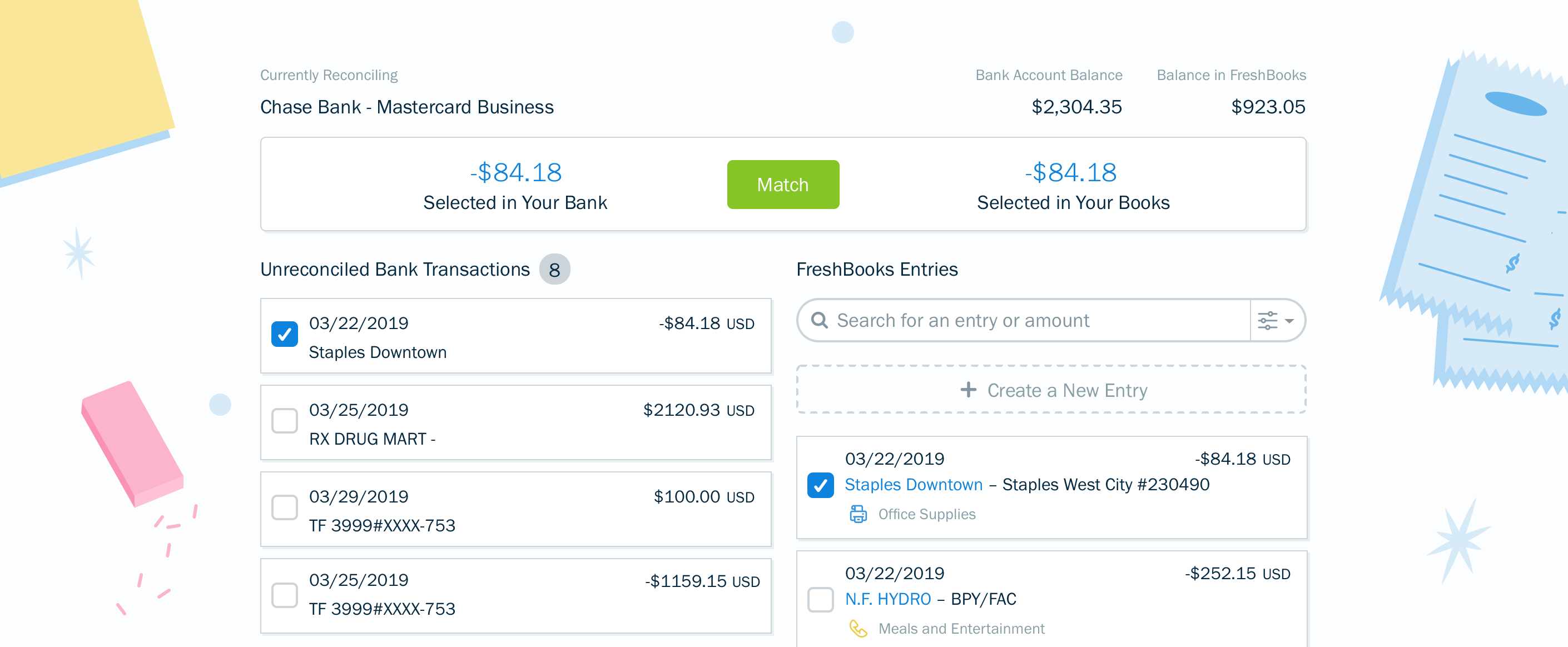
We designed a guided, tactile workflow that helps owners reconcile transactions gradually rather once a month
FreshBooks automatically imports bank transactions and suggests likely matches to existing entries, turning a long monthly task into small, frequent actions.
When a match can't be made automatically, users can search, allocate manually, or create a missing entry without leaving the workflow. The interface is made to feel clear and controlled, reducing cognitive load while maintaining accounting accuracy.
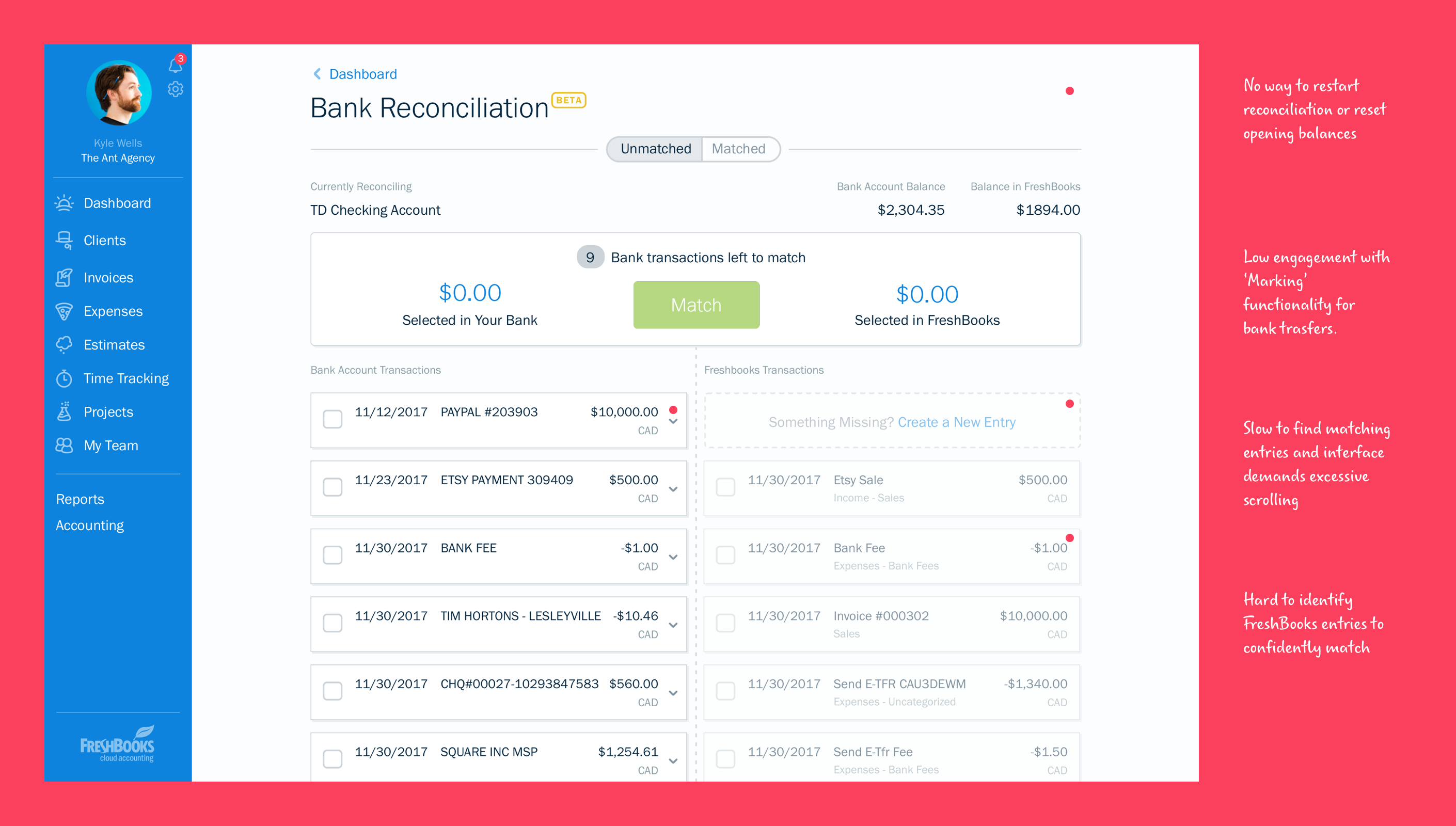
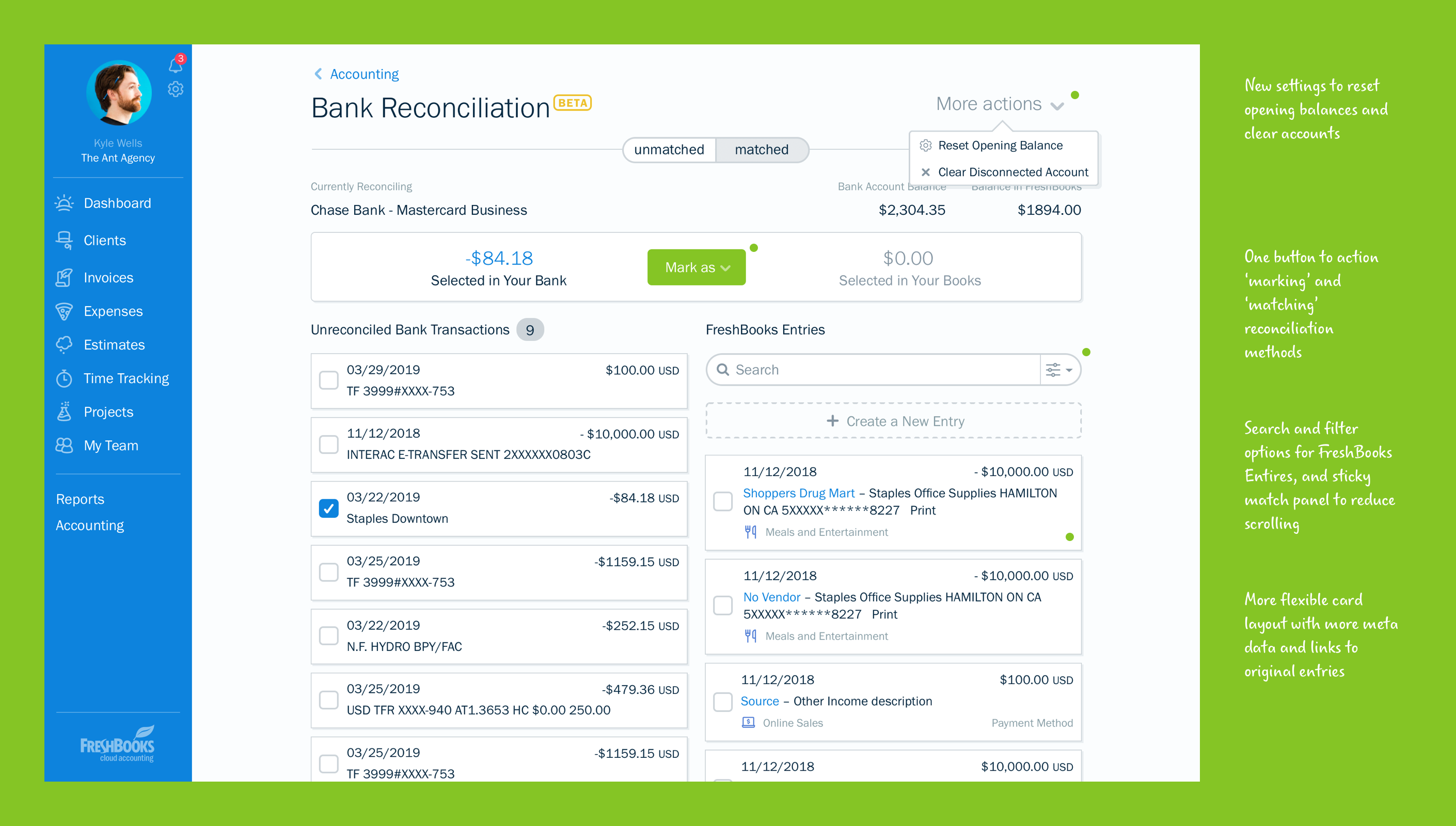
Post-beta, we stabilised and evolved the feature based on engagement data and qualitative testing
Following the December 2018 beta launch, we prioritised improvements across bugs, edge cases, unsupported workflows, and usability friction.
I worked with product and engineering to sequence enhancements that improved clarity and reliability, ensuring the feature could support a growing cohort of small businesses with varying levels of accounting confidence.
.jpg)
I facilitated cross-functional collaboration to translate accounting complexity into usable product decisions
Each initiative began with a full-team kickoff, bringing support representatives and accounting experts into the room alongside product and engineering.
I facilitated problem framing and early solution sketching before breaking concepts into discrete, buildable pieces. This approach created shared ownership, incorporated domain expertise early, and ensured we balanced technical solutions with outcomes for the user.